Giving your child the best start in life

  • Sant Dnyaneshwar Chowk, Adarsh Nagar, Uruli Devachi

Get In Touch

Play-Based Learning: The Heart of Nursery Education

Play-Based Learning: The Heart of Nursery Education

  • Play-Based Learning: The Heart of Nursery Education
Play-Based Learning

Early childhood is the most important stage of a child’s development. During these years, children learn fastest through curiosity, exploration, and interaction. One of the most effective and research-supported approaches used worldwide is Play-Based Learning. It helps children develop essential life skills while keeping them engaged and happy.

At Oxford East International School, we believe that learning should be joyful, meaningful, and child-centered. Our nursery program uses structured and unstructured play to support cognitive, social, emotional, and physical development. This approach prepares children not only for academic success but also for lifelong learning.

What is Play-Based Learning?

Play-Based Learning is an educational approach where children learn through guided play and exploration. Instead of only sitting and listening, children actively participate in activities such as storytelling, building blocks, pretend play, puzzles, art, and games.

This method is based on the play based learning theory, which explains that children learn best when they are engaged, curious, and emotionally connected to the activity. When children play, they naturally develop problem-solving skills, creativity, and confidence.

Teachers play an important role by observing children, guiding their exploration, and using play based learning lesson plans to achieve specific learning goals. This balance ensures that play remains fun while also supporting structured development.

Ideas for Play-Based Learning Activities

There are many effective play based learning activities that support different areas of development. At Oxford East International School, we use carefully designed activities that match each child’s age and abilities.

Some proven play based learning ideas include:

  • Building with blocks to improve creativity and logical thinking

  • Role-playing games like doctor, teacher, or shopkeeper

  • Storytelling and puppet shows to enhance imagination

  • Puzzle solving for problem-solving skills

  • Drawing, painting, and craft activities for creative expression

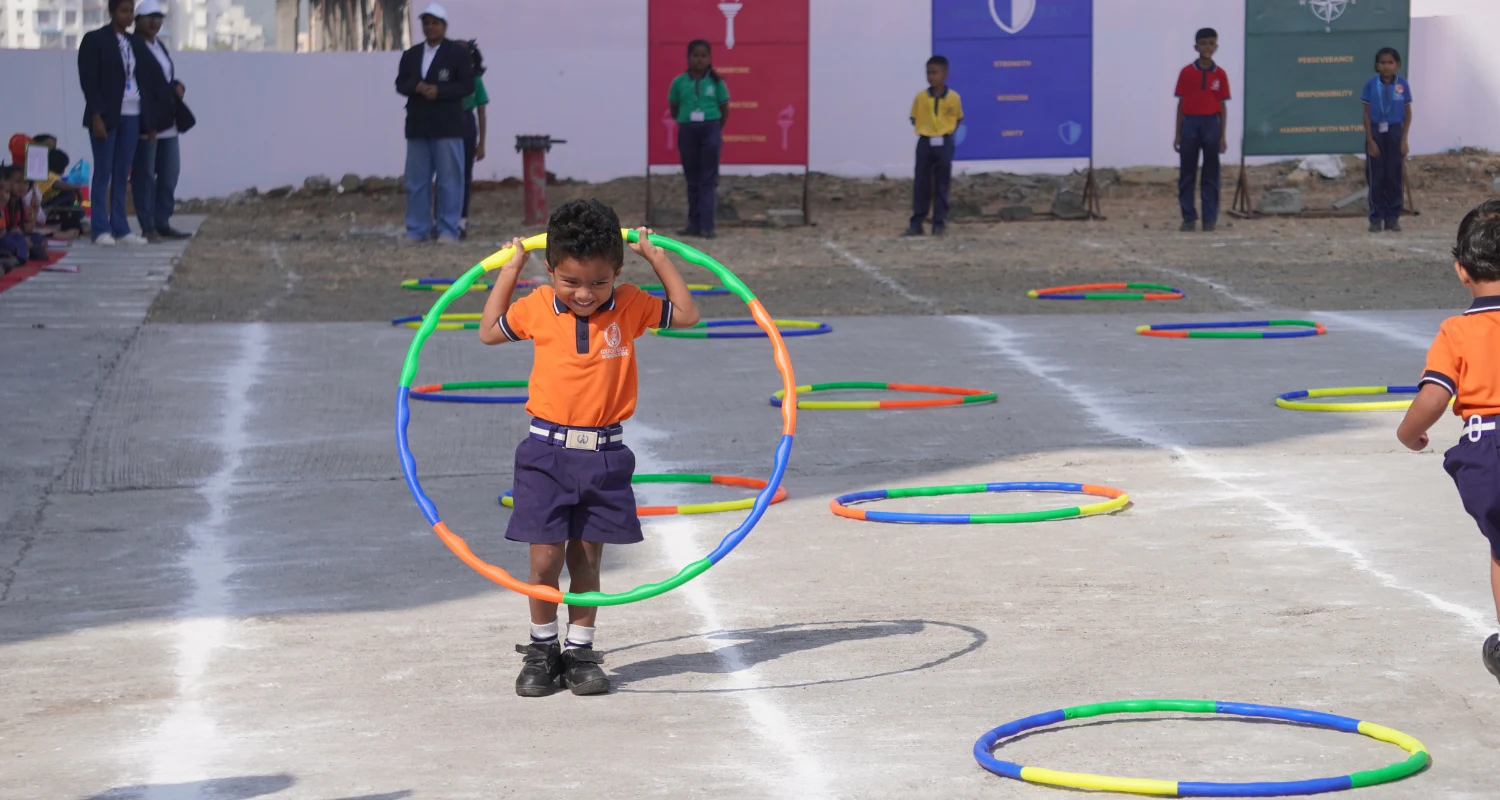
  • Outdoor games that improve physical strength and coordination

These activities help children learn naturally without pressure.

You May Also Like This Blog:- 10 Key features of Convent School in Hadapsar

Good Touch Bad Touch Chart

Natural Learning Environment

Children learn best in a safe and stimulating space. A well-designed classroom filled with colours, learning materials, books, and creative corners encourages curiosity.

At Oxford East International School, our nursery environment is built to promote independent exploration. Open shelves, interactive walls, and activity stations support structured and free play.

A natural learning environment strengthens the impact of Play-Based Learning by giving children the freedom to move, observe, and experiment.


Cognitive Development

Young children constantly ask questions. Why is the sky blue? How does a toy car move?

Through Play-Based Learning, children test ideas, solve small problems, and understand cause and effect. Activities like puzzles, sorting games, and building tasks improve memory, logical thinking, and concentration.

Research behind play based learning theory shows that playful problem-solving builds strong neural connections in early childhood. This lays the foundation for academic success in later years.


Social Skills and Emotional Intelligence

Nursery is often a child’s first social environment outside home. Sharing toys, waiting for turns, and expressing feelings are important lessons.

Group-based play based learning activities teach cooperation, empathy, and respect. When children participate in role play, they learn to understand different perspectives.

This approach helps children build emotional intelligence. They learn how to manage frustration, celebrate success, and work as a team.


Language Development

Communication skills grow naturally when children interact during play. Conversations in pretend play, storytelling sessions, and group games improve vocabulary and sentence formation.

Teachers at Oxford East International School encourage open communication. Through well-planned play based learning lesson plans, children practice listening and speaking skills daily.

This builds confidence and prepares them for formal schooling.


Motor Skills

Physical movement is essential for healthy growth. Climbing, running, drawing, and stacking blocks strengthen both gross and fine motor skills.

Outdoor games and hands-on activities are an integral part of Play-Based Learning. Activities such as threading beads or cutting paper improve hand-eye coordination and writing readiness.

Children develop strength, balance, and control in a natural way.


Creativity and Imagination

Imagination is a powerful learning tool. When children pretend to be doctors, astronauts, or teachers, they explore possibilities.

Creative play based learning ideas like art corners, music sessions, and storytelling nurture originality. Children learn to think beyond textbooks.

Creativity developed in early years encourages innovation and independent thinking in the future.


Love for Learning

When learning feels like pressure, children lose interest. When learning feels like play, children stay curious.

Play-Based Learning creates positive emotional associations with education. Children feel happy and secure in school.

At Oxford East International School, we focus on joyful experiences so that children develop a lifelong love for learning.


Individualized Learning

Every child is unique. Some learn quickly through visuals. Others prefer hands-on activities.

Well-designed play based learning lesson plans allow teachers to observe each child’s strengths and areas of improvement. Activities can be adapted according to individual needs.

This personalised attention builds confidence and ensures balanced development.


Resilience and Problem-Solving

When children build a tower and it falls, they try again. When they lose a game, they learn to cope.

These small experiences develop resilience. Through structured play based learning activities, children learn patience and determination.

They become confident problem-solvers who are not afraid to try new things.


Parental Engagement

Parents play an important role in reinforcing learning at home. At Oxford East International School, we guide parents with simple play based learning ideas that can be practiced daily.

Story reading, pretend play, cooking together, and outdoor exploration strengthen the parent-child bond while supporting development.

When school and home work together, learning becomes more meaningful.
Practical Tips for Implementing Play-Based Learning

Parents often ask how they can adopt this approach at home. Here are practical suggestions:

1. Make the Environment Play-Friendly

Create a small play corner with books, blocks, crayons, and puzzles. Keep materials accessible so children can choose activities independently.

A safe and inviting space supports effective Play-Based Learning at home.

2. Join in the Fun

Spend time playing with your child. Ask questions and encourage imagination. Avoid controlling the play. Let it flow naturally.

Your involvement strengthens emotional connection and learning outcomes.

3. Let Them Explore

Children are naturally curious. Allow them to explore nature, textures, sounds, and simple experiments.

Unstructured exploration builds confidence and creativity.

4. Mix of Structured and Free Play

Both are important. Structured play has learning goals, while free play encourages independence.

Balanced play based learning lesson plans include both formats for holistic development.

5. Integrate Play with Learning Goals

You can teach counting with blocks. You can improve vocabulary through storytelling games.

When play is connected to learning objectives, it becomes powerful and purposeful.

Why Choose Oxford East International School?

At Oxford East International School, we combine global educational standards with Indian cultural values. Our trained educators understand child psychology and early development principles.

Our commitment to Play-Based Learning ensures that every child feels safe, valued, and inspired. We follow research-backed play based learning theory and implement structured play based learning lesson plans tailored for nursery children.

We focus on:

  • Safe and secure campus

  • Experienced and caring teachers

  • Activity-based curriculum

  • Strong parent-school communication

  • Holistic child development

Our goal is not just academic excellence but overall growth.

Conclusion

The early years are too precious to be limited to rote learning. Children need freedom, creativity, and meaningful engagement.

Play-Based Learning is not just a teaching trend. It is a scientifically supported approach that builds cognitive skills, emotional strength, social confidence, and lifelong curiosity.

At Oxford East International School, we proudly place play at the heart of nursery education. We nurture thinkers, explorers, and confident learners.

If you want your child to grow in a joyful, stimulating, and caring environment, we invite you to connect with us. Admissions are open, and our team would be happy to guide you.

Give your child the gift of learning through play — because the best education begins with happiness.

FAQs – Play-Based Learning: The Heart of Nursery Education

1. What is Play-Based Learning in nursery education?
Play-Based Learning is a child-centered approach where children learn academic and life skills through structured and guided play activities.

2. Why is Play-Based Learning important for young children?
Play-Based Learning supports cognitive, social, emotional, and physical development while building a strong foundation for lifelong learning.

3. What are examples of play based learning activities?
Examples include role play, storytelling, block building, art and craft, sensory play, and outdoor exploration games.

4. How do teachers create play based learning lesson plans?
Teachers design play based learning lesson plans by aligning fun activities with clear educational goals in literacy, numeracy, and skill development.

5. Can Play-Based Learning improve a child’s confidence?
Yes, Play-Based Learning builds confidence by encouraging creativity, problem-solving, communication, and independent thinking.

Here Why you choose OEIS

feature

Excellence as Standard

  • We deliver consistently high academic achievement with a future-focused curriculum.
feature

Educators Who Inspire

  • Our expert faculty nurture individual potential through mentorship and innovation.
feature

Values That Last

  • We cultivate integrity, empathy, and leadership in every student.
feature

World-Class Facilities

  • Our modern campus fuels creativity, exploration, and confidence.

Enquiry Form

Join OEIS and become part of a dynamic team committed to shaping the future

Add Your Heading Text Here